
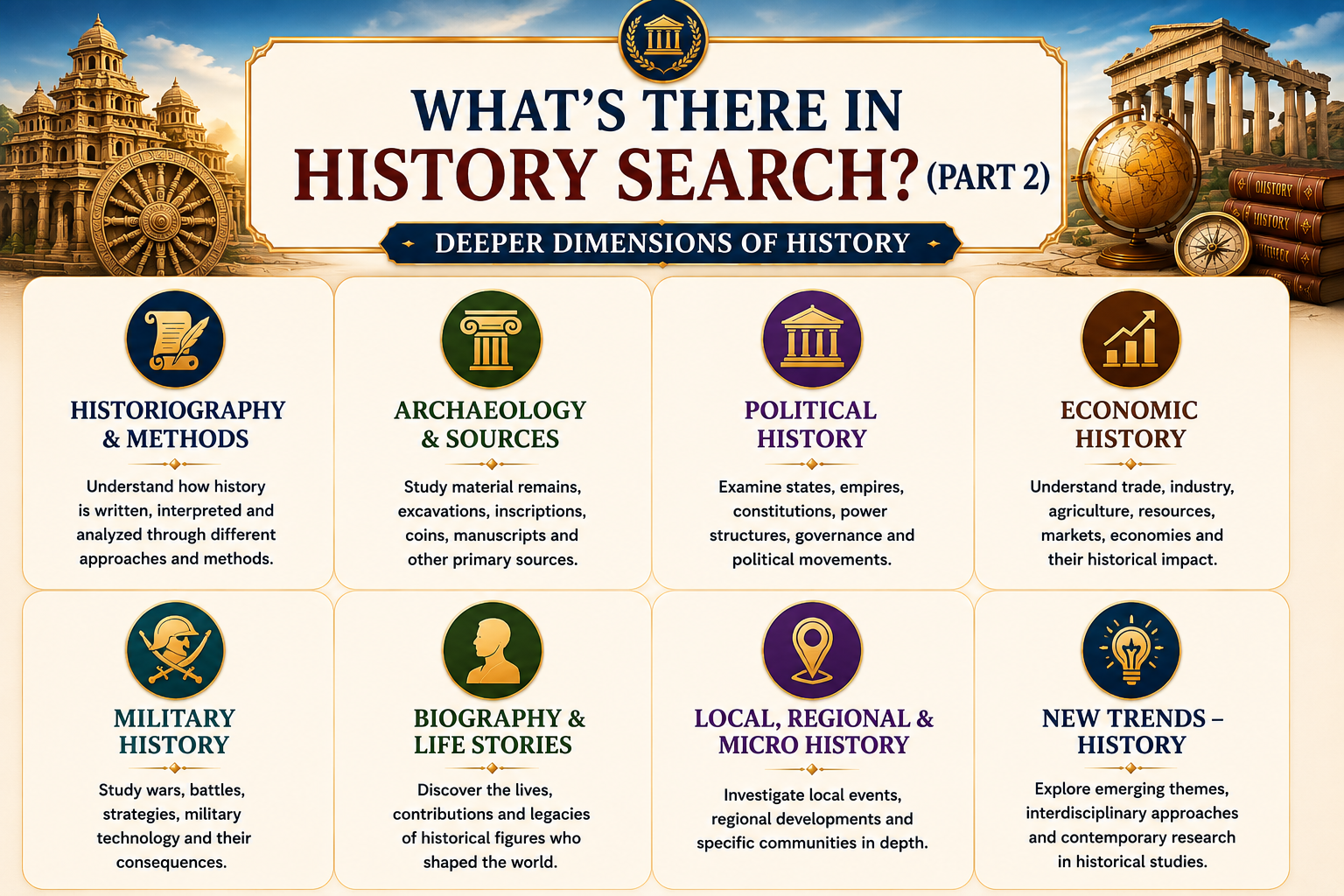
1. HISTORIOGRAPHY & METHODS
Understand how history is written, interpreted, debated and reconstructed through different approaches and methods.
History is not simply a collection of past events. Historians select evidence, ask questions, interpret sources and construct explanations. Historiography examines how historical interpretations have developed and changed over time.
Explore Historiography & Methods
1. Understanding Historiography
- Meaning and scope
- History and historiography
- Historical interpretation
- Historical consciousness
- Historical debates
2. Historical Approaches
- Political history
- Social history
- Economic history
- Cultural history
- Intellectual history
- Environmental history
- Gender history
- Subaltern history
- Global history
3. Major Historiographical Traditions
- Classical historiography
- Medieval historiography
- Enlightenment historiography
- Nationalist historiography
- Marxist historiography
- Annales School
- Postcolonial historiography
- Subaltern Studies
- Postmodern approaches
4. Historical Methods
- Research questions
- Hypothesis
- Source criticism
- Contextual analysis
- Comparative method
- Chronological method
- Interdisciplinary research
5. Historical Evidence
- Primary sources
- Secondary sources
- Oral sources
- Material evidence
- Archival records
- Digital sources
6. Writing History
- Argument construction
- Evidence and interpretation
- Citation
- Footnotes
- Bibliography
- Historical narrative
Explore Further
Historians | Schools of Thought | Historical Methods | Primary Sources | Secondary Sources | Historiographical Debates | Research Skills | Questions | Open-Access Resources
Studentsfree History Search:
Learn not only what historians say about the past, but how and why they interpret it.
2. ARCHAEOLOGY & SOURCES
Study material remains, excavations, inscriptions, coins, manuscripts and other sources that help reconstruct the human past.
Archaeology provides evidence of human activity through material remains, while historical sources preserve written, visual, oral and documentary evidence. Together they allow historians to reconstruct societies across time.
Explore Archaeology & Sources
1. Archaeological Foundations
- Meaning of archaeology
- Archaeological evidence
- Excavation
- Survey
- Stratigraphy
- Dating methods
2. Material Culture
- Tools
- Pottery
- Architecture
- Sculptures
- Weapons
- Ornaments
- Burial remains
3. Epigraphy
- Inscriptions
- Rock inscriptions
- Copper plates
- Temple inscriptions
- Administrative records
4. Numismatics
- Coins
- Coin types
- Legends
- Symbols
- Monetary systems
- Economic history
5. Literary Sources
- Religious texts
- Epics
- Chronicles
- Biographies
- Travel accounts
- Court literature
6. Oral & Visual Sources
- Oral traditions
- Folklore
- Songs
- Photographs
- Paintings
- Maps
- Films
7. Archives & Digital Sources
- Government archives
- Private collections
- Digital archives
- Manuscript repositories
- Online databases
Explore Further
Archaeological Sites | Excavations | Inscriptions | Coins | Manuscripts | Archives | Museums | Primary Sources | Source Criticism | Open-Access Collections
Studentsfree History Search:
Discover how evidence transforms traces of the past into historical knowledge.
3. POLITICAL HISTORY
Examine states, empires, constitutions, rulers, institutions, power structures, governance and political movements.
Political History studies the organization and exercise of power and explores how states, governments, political institutions and movements have shaped historical change.
Explore Political History
1. States & Political Institutions
- Origins of states
- Kingdoms
- Empires
- Republics
- Nation-states
- Political institutions
2. Kings & Rulers
- Monarchies
- Dynasties
- Emperors
- Political leadership
- Succession
3. Governance
- Administration
- Law
- Bureaucracy
- Local government
- Diplomacy
4. Empires
- Imperial expansion
- Administration
- Imperial ideology
- Resistance
- Decline and transformation
5. Constitutions & Political Thought
- Constitutionalism
- Democracy
- Republicanism
- Political philosophy
- Rights and citizenship
6. Political Movements
- Nationalism
- Independence movements
- Reform movements
- Revolutionary movements
- Democratic movements
7. International Relations
- Diplomacy
- Alliances
- Treaties
- Geopolitics
- International organizations
Explore Further
Rulers | Dynasties | Empires | Governments | Constitutions | Political Movements | Diplomacy | Wars | Treaties | Political Ideas | Questions
Studentsfree History Search:
Trace the evolution of power, governance, states and political ideas across human history.
4. ECONOMIC HISTORY
Understand agriculture, trade, industry, labour, markets, resources, technology and economic systems and their impact on historical change.
Economic History explores how people produced, exchanged and consumed goods and how economic forces influenced societies, states and civilizations.
Explore Economic History
1. Agriculture
- Early agriculture
- Land ownership
- Irrigation
- Agrarian systems
- Agricultural taxation
2. Trade & Commerce
- Local markets
- Long-distance trade
- Maritime trade
- Trade routes
- Merchants
3. Money & Finance
- Barter
- Coinage
- Banking
- Credit
- Taxation
- Financial institutions
4. Industry
- Crafts
- Manufacturing
- Industrial Revolution
- Factories
- Mechanization
5. Labour
- Slavery
- Peasant labour
- Artisans
- Industrial workers
- Labour movements
6. Colonial Economies
- Colonial trade
- Land revenue
- Resource extraction
- Plantation economy
- Economic exploitation
7. Global Economy
- Capitalism
- Global trade
- International markets
- Economic globalization
- Economic crises
Explore Further
Agriculture | Trade | Industry | Labour | Money | Markets | Taxation | Colonial Economy | Capitalism | Globalization | Economic Data
Studentsfree History Search:
Understand how economies shape societies—and how economic change transforms history.
5. MILITARY HISTORY
Study wars, battles, strategies, military technology, armies and their political and social consequences.
Military History is more than the study of battles. It examines warfare as a historical phenomenon and explores its relationship with politics, society, technology, economy and culture.
Explore Military History
1. Warfare in the Ancient World
- Ancient armies
- Weapons
- Fortifications
- Siege warfare
- Naval warfare
2. Medieval Warfare
- Cavalry
- Fortifications
- Siege technology
- Gunpowder
- Military organization
3. Early Modern Warfare
- Firearms
- Artillery
- Standing armies
- Naval expansion
4. Modern Warfare
- Industrial warfare
- Mechanization
- Air power
- Naval technology
- Total war
5. Major Wars
- Ancient wars
- Medieval conflicts
- Colonial wars
- World Wars
- Cold War conflicts
6. Strategy & Tactics
- Military strategy
- Battlefield tactics
- Logistics
- Intelligence
- Command
7. War & Society
- Civilians
- Refugees
- Economy
- Propaganda
- War memory
- Reconstruction
Explore Further
Wars | Battles | Armies | Weapons | Fortifications | Generals | Strategy | Military Technology | Maps | War Documents
Studentsfree History Search:
Understand warfare not only through battles, but through the societies, technologies and political forces behind them.
6. BIOGRAPHY & LIFE STORIES
Discover the lives, contributions, struggles and legacies of people who shaped historical change.
Biography connects individual lives with the larger historical circumstances in which people lived. The study of historical personalities can illuminate political, social, cultural, scientific and intellectual transformations.
Explore Biography & Life Stories
1. Political Leaders
- Kings
- Emperors
- Presidents
- Prime Ministers
- Statesmen
2. Freedom Fighters & Reformers
- National leaders
- Social reformers
- Anti-colonial activists
- Human-rights figures
3. Thinkers & Intellectuals
- Philosophers
- Historians
- Political thinkers
- Social scientists
4. Scientists & Innovators
- Scientists
- Inventors
- Engineers
- Technological pioneers
5. Writers & Artists
- Authors
- Poets
- Artists
- Musicians
- Filmmakers
6. Women in History
- Political leaders
- Reformers
- Scholars
- Activists
- Artists
7. Ordinary Lives
- Workers
- Farmers
- Traders
- Soldiers
- Migrants
- Community leaders
Explore Further
Biographies | Autobiographies | Memoirs | Letters | Diaries | Speeches | Personal Archives | Historical Context | Legacy | Primary Sources
Studentsfree History Search:
Meet the people behind historical change and understand their lives within the world they inhabited.
7. LOCAL, REGIONAL & MICRO HISTORY
Investigate local events, regional developments, communities and everyday experiences in depth.
History becomes meaningful when global and national developments are connected with the places and communities where people actually lived.
Explore Local & Regional History
1. Local History
- Towns
- Villages
- Cities
- Local institutions
- Local traditions
2. Regional History
- Regions
- Provinces
- Cultural zones
- Regional kingdoms
- Regional movements
3. Microhistory
- Small communities
- Individuals
- Families
- Specific events
- Everyday experiences
4. Heritage
- Monuments
- Temples
- Forts
- Archaeological sites
- Historic buildings
5. Community History
- Caste and communities
- Tribal communities
- Religious communities
- Occupational groups
- Migrant communities
6. Oral History
- Memories
- Family histories
- Local narratives
- Folk traditions
- Community testimony
7. Local Sources
- Gazetteers
- District records
- Land records
- Inscriptions
- Newspapers
- Maps
- Photographs
Explore Further
District History | Village History | City History | Regional Kingdoms | Local Personalities | Heritage | Oral History | Archives | Maps | Microhistory
Studentsfree History Search:
Explore history where it happened—within villages, towns, cities, regions and communities.
8. NEW TRENDS – HISTORY
Explore emerging themes, interdisciplinary approaches, digital methods and contemporary directions in historical research.
History is continuously evolving. New technologies, new sources and new questions are expanding how historians investigate and understand the past.
Explore New Trends in History
1. Digital History
- Digital archives
- Digital humanities
- Online databases
- Digital collections
- Historical data
2. Environmental History
- Climate
- Ecology
- Forests
- Water
- Natural disasters
- Human-environment relationships
3. Global & Transnational History
- Global connections
- Migration
- Diasporas
- Transnational networks
- Global commodities
4. Gender & History
- Gender identities
- Women's history
- Masculinity
- Family
- Gender relations
5. History of Everyday Life
- Food
- Clothing
- Housing
- Work
- Leisure
- Popular culture
6. Memory & Heritage
- Collective memory
- Historical memory
- Museums
- Monuments
- Heritage politics
7. Public History
- Museums
- Archives
- Exhibitions
- Historical documentaries
- Digital storytelling
8. New Technologies
- GIS and historical mapping
- Data visualization
- Artificial intelligence
- Digital reconstruction
- Computational history
- 3D heritage
9. Interdisciplinary History
- History and archaeology
- History and anthropology
- History and sociology
- History and economics
- History and geography
- History and environmental studies
Explore Further
Digital History | Environmental History | Global History | Gender History | Memory Studies | Heritage Studies | Public History | GIS | AI & History | Interdisciplinary Research
Studentsfree History Search:
Discover how new questions, technologies and interdisciplinary approaches are transforming the study of the past.