1. Ancient History
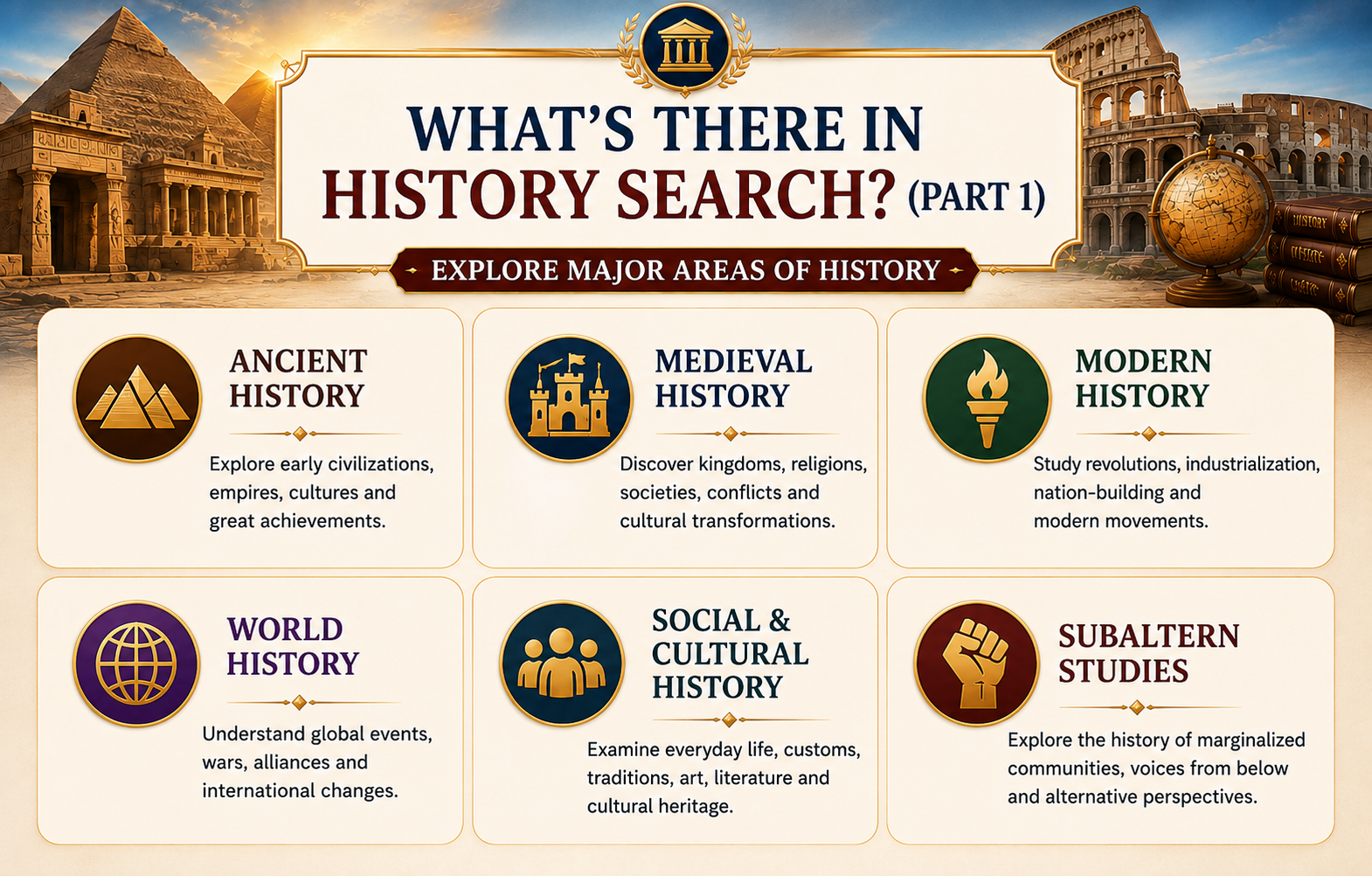
Explore the origins of civilizations, states, cultures, religions, technologies and ideas that shaped the ancient world.
Ancient History takes us from the earliest human communities and the emergence of agriculture to the development of cities, kingdoms, empires, writing systems, trade networks, religions and sophisticated cultures.
Explore Ancient History
1. Prehistoric Foundations
- Human evolution
- Stone Age cultures
- Paleolithic societies
- Mesolithic communities
- Neolithic Revolution
- Beginning of agriculture
- Early settlements
- Megalithic cultures
2. Early Civilizations
- Mesopotamia
- Ancient Egypt
- Indus Valley Civilization
- Ancient China
- Minoan and Mycenaean civilizations
- Early civilizations of Africa
- Ancient Americas
3. Ancient India
- Prehistoric India
- Indus Valley Civilization
- Vedic Age
- Mahajanapadas
- Buddhism and Jainism
- Mauryan Empire
- Post-Mauryan India
- Sangam Age
- Gupta Empire
- Early South Indian kingdoms
4. Ancient Greece
- Archaic Greece
- Athens and Sparta
- Persian Wars
- Classical Greece
- Alexander the Great
- Hellenistic civilization
5. Ancient Rome
- Roman Kingdom
- Roman Republic
- Roman Empire
- Roman society
- Roman law
- Roman economy
- Christianity
- Decline and transformation of Rome
6. Ancient Society & Culture
- Family and social organization
- Slavery
- Women
- Education
- Religion
- Art and architecture
- Literature
- Science and technology
7. Ancient Economy & Trade
- Agriculture
- Crafts
- Coinage
- Maritime trade
- Silk Roads
- Indian Ocean networks
- Urban economies
8. Ancient Sources
- Archaeological evidence
- Inscriptions
- Coins
- Manuscripts
- Literary sources
- Oral traditions
- Monuments
- Material culture
Explore Further
Timeline | Maps | Civilizations | Important Personalities | Archaeological Sites | Primary Sources | Detailed Notes | Questions | MCQs | Open-Access Sources
Studentsfree History Search:
Search, explore and understand the ancient world through evidence-based history.
2. Medieval History
Discover kingdoms, empires, religions, societies, conflicts and cultural transformations that shaped the medieval world.
Medieval History explores the transformation of societies following the ancient world and examines the rise of kingdoms and empires, religious institutions, trade networks, intellectual traditions and cultural interactions across Asia, Europe, Africa and other regions.
Explore Medieval History
1. Medieval India
- Early medieval India
- Rajput kingdoms
- Cholas
- Chalukyas
- Rashtrakutas
- Delhi Sultanate
- Vijayanagara Empire
- Bahmani Kingdom
- Mughal Empire
- Regional states
2. Medieval Europe
- Byzantine Empire
- Feudalism
- Medieval kingdoms
- Holy Roman Empire
- Medieval Church
- Crusades
- Towns and guilds
- Renaissance beginnings
3. Islamic Civilizations
- Rise of Islam
- Caliphates
- Umayyads
- Abbasids
- Islamic Spain
- Ottoman Empire
- Persian traditions
- Islamic scholarship
4. Medieval Africa
- Ghana
- Mali
- Songhai
- Trans-Saharan trade
- Swahili Coast
- Ethiopia
- African kingdoms and societies
5. Medieval Asia
- China
- Japan
- Korea
- Central Asia
- Mongol Empire
- Southeast Asian kingdoms
6. Society & Culture
- Caste and social organization
- Feudal relationships
- Peasants and landlords
- Women
- Slavery
- Religion
- Education
- Literature
- Art and architecture
7. Economy & Trade
- Agriculture
- Markets
- Guilds
- Urbanization
- Silk Road
- Indian Ocean trade
- Maritime networks
8. Religion & Intellectual Life
- Christianity
- Islam
- Hindu traditions
- Buddhism
- Jainism
- Sufism
- Bhakti traditions
- Medieval universities
- Scientific traditions
Explore Further
Timeline | Dynasties | Empires | Maps | Battles | Religion | Society | Architecture | Literature | Primary Sources | Questions | Open-Access Resources
Studentsfree History Search:
Explore the medieval world through kingdoms, cultures, connections and historical evidence.
3. Modern History
Study revolutions, industrialization, nationalism, colonialism, imperialism, nation-building and the movements that transformed the modern world.
Modern History examines the profound political, economic, social and intellectual transformations that shaped the contemporary world.
Explore Modern History
1. Renaissance & Reformation
- Renaissance
- Humanism
- Reformation
- Scientific Revolution
- Enlightenment
2. Political Revolutions
- English Revolution
- American Revolution
- French Revolution
- Latin American independence
- Revolutions of 1848
3. Industrial Revolution
- Industrialization
- Factories
- Urbanization
- Labour
- Capitalism
- Technology
- Social transformation
4. Nationalism & Nation-States
- Nationalism
- Italian unification
- German unification
- National movements
- State formation
5. Colonialism & Imperialism
- European expansion
- Colonial administration
- Economic exploitation
- Resistance
- Anti-colonial movements
6. Modern India
- British expansion
- Colonial economy
- Social and religious reform
- Revolt of 1857
- Indian National Congress
- National movement
- Gandhian era
- Revolutionary movements
- Partition
- Independence
7. World Wars
- First World War
- Interwar period
- Second World War
- Holocaust
- Decolonization
8. Contemporary Transformations
- Cold War
- United Nations
- Decolonization
- Globalization
- Civil rights
- Feminist movements
- Technological transformation
Explore Further
Timeline | Revolutions | Colonialism | Nationalism | Indian National Movement | World Wars | Maps | Leaders | Documents | Questions | Open-Access Sources
Studentsfree History Search:
Understand the forces that transformed the modern world and continue to shape our present.
4. World History
Understand global events, civilizations, wars, alliances, migrations, exchanges and international changes across time and space.
World History moves beyond individual national histories and examines the connections between peoples, regions and civilizations.
Explore World History
1. Global Civilizations
- Africa
- Asia
- Europe
- Americas
- Middle East
- Oceania
2. Ancient World
- Early civilizations
- Empires
- Trade networks
- Cultural exchanges
3. Medieval World
- Islamic civilizations
- European kingdoms
- Asian empires
- African kingdoms
- Mongol expansion
4. Early Modern World
- Maritime expansion
- European overseas empires
- Columbian Exchange
- Global trade
- Early capitalism
5. Modern World
- Industrialization
- Nationalism
- Imperialism
- Colonialism
- World Wars
6. Global Conflicts
- Major wars
- Revolutions
- Cold War
- Regional conflicts
- International organizations
7. Global Movements
- Abolition
- Nationalism
- Anti-colonial movements
- Civil rights
- Women's movements
- Human rights
8. Global Connections
- Migration
- Trade
- Technology
- Ideas
- Religions
- Languages
- Cultural exchange
- Globalization
Explore Further
Global Timeline | Interactive Maps | Civilizations | Empires | Wars | Migrations | Trade Routes | International Relations | Global Leaders | Primary Sources | Questions
Studentsfree History Search:
See history not as isolated stories, but as an interconnected human journey.
5. Social & Cultural History
Examine everyday life, customs, traditions, art, literature, beliefs and cultural heritage that reveal how people experienced the past.
History is not only the history of kings, battles and governments. Social and Cultural History places ordinary people, communities and everyday experiences at the centre of historical inquiry.
Explore Social & Cultural History
1. Everyday Life
- Food
- Clothing
- Housing
- Family
- Childhood
- Leisure
- Festivals
2. Society
- Social classes
- Caste
- Communities
- Tribes
- Social mobility
- Urban and rural societies
3. Family & Gender
- Marriage
- Kinship
- Women
- Gender roles
- Childhood
- Household organization
4. Religion & Belief
- Religious traditions
- Rituals
- Pilgrimage
- Popular beliefs
- Sacred spaces
- Religious communities
5. Art & Architecture
- Painting
- Sculpture
- Architecture
- Monuments
- Decorative traditions
- Performing arts
6. Literature & Language
- Oral traditions
- Poetry
- Epics
- Drama
- Folklore
- Languages
- Historical literature
7. Education & Knowledge
- Traditional education
- Universities
- Libraries
- Manuscripts
- Scientific knowledge
- Intellectual traditions
8. Cultural Heritage
- Tangible heritage
- Intangible heritage
- Museums
- Archaeological sites
- Conservation
- Cultural memory
Explore Further
Everyday Life | Women | Family | Religion | Art | Literature | Folklore | Food | Clothing | Heritage | Oral History | Cultural Sources
Studentsfree History Search:
Discover the people, traditions, beliefs and everyday experiences behind the great events of history.
6. Subaltern Studies
Explore histories from below — bringing marginalized communities, ordinary people and previously neglected voices into historical understanding.
Subaltern Studies represents an important shift in historical thinking: instead of examining history only through rulers, institutions and elites, historians also investigate the experiences, actions and perspectives of people who have traditionally received less attention in historical narratives.
Explore Subaltern History
1. Meaning & Origins
- Meaning of “subaltern”
- Origins of Subaltern Studies
- Historiographical foundations
- History from below
2. Peasants & Rural Communities
- Peasant movements
- Agrarian societies
- Land relations
- Rural resistance
- Colonial countryside
3. Tribal & Indigenous Histories
- Indigenous communities
- Tribal societies
- Land and forest
- Colonial encounters
- Resistance movements
4. Labour & Working People
- Industrial workers
- Plantation labour
- Migrant labour
- Labour movements
- Working-class history
5. Women & Gender
- Women's experiences
- Gender and power
- Women's movements
- Everyday resistance
- Gendered historical narratives
6. Marginalized Communities
- Dalit histories
- Minority communities
- Displaced populations
- Refugees
- Social exclusion
- Community identities
7. Resistance & Popular Movements
- Peasant rebellions
- Tribal uprisings
- Labour movements
- Anti-colonial resistance
- Local movements
- Everyday forms of resistance
8. Sources & Methods
- Oral histories
- Folk traditions
- Local records
- Autobiographies
- Testimonies
- Songs and folklore
- Material culture
- Alternative archives
9. Historiographical Debates
- Elite history
- Nationalist history
- Marxist history
- Subaltern historiography
- Postcolonial perspectives
- Critiques and debates
Explore Further
Historiography | Peasant Studies | Tribal History | Labour History | Women's History | Dalit History | Oral History | Resistance | Local History | Sources | Scholars | Debates
Studentsfree History Search:
History becomes richer when we listen not only to those who ruled, but also to those who lived, struggled, resisted and remembered.