
1. WORLD LITERATURE
Discover great literary traditions, stories, voices and ideas from cultures and civilizations across the world.
World Literature brings together literary works from different regions, languages, historical periods and cultural traditions. It allows learners to encounter humanity through epics, poetry, drama, novels, short stories, oral traditions and contemporary writing.
What can be explored?
Ancient Literary Traditions
- Mesopotamian literature
- Egyptian literary traditions
- Greek literature
- Roman literature
- Indian classical literature
- Chinese classical literature
- Ancient Near Eastern traditions
Epics & Great Narratives
- Epic of Gilgamesh
- Mahabharata
- Ramayana
- Greek epics
- Roman epic traditions
- Medieval European epics
- African oral epics
- Asian epic traditions
Major Literary Forms
- Poetry
- Epic
- Drama
- Novel
- Short story
- Essay
- Biography
- Memoir
- Folklore
- Oral literature
Global Literary Movements
- Classicism
- Romanticism
- Realism
- Modernism
- Postmodernism
- Modern and contemporary literature
- Postcolonial literature
Global Themes
- Love
- Identity
- War
- Migration
- Freedom
- Religion
- Nature
- Power
- Death
- Human existence
- Colonialism
- Cultural identity
Explore Further
Authors • Works • Literary Periods • Genres • Movements • Themes • Languages • Translations • Literary Maps • Timelines • Literary Sources
Studentsfree Literature Search:
Explore humanity through the stories, poems, ideas and voices of the world's literary traditions.
2. ENGLISH LITERATURE
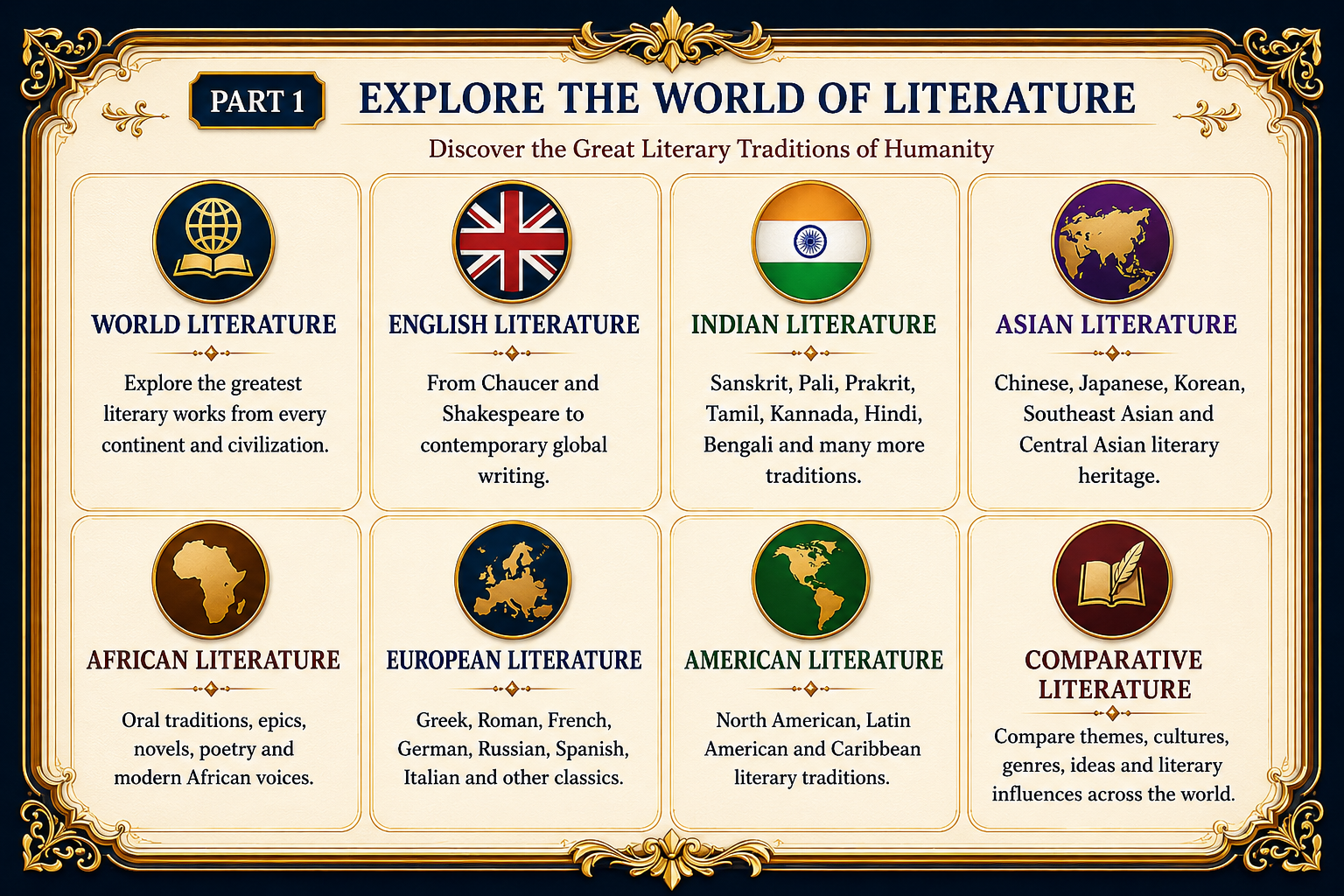
From Chaucer and Shakespeare to contemporary global writing, explore the development of literature in English across centuries.
English Literature encompasses a long and evolving tradition shaped by historical change, linguistic development, intellectual movements and interactions with cultures around the world.
What can be explored?
Old & Middle English
- Anglo-Saxon literature
- Beowulf
- Old English poetry
- Chaucer
- The Canterbury Tales
Renaissance & Elizabethan Literature
- Shakespeare
- Christopher Marlowe
- Edmund Spenser
- Elizabethan drama
- Renaissance humanism
17th & 18th Centuries
- Metaphysical poetry
- John Milton
- Restoration literature
- Satire
- Augustan literature
- Samuel Johnson
- Jonathan Swift
Romantic Period
- William Wordsworth
- Samuel Taylor Coleridge
- Lord Byron
- Percy Bysshe Shelley
- John Keats
- Romanticism and nature
Victorian Literature
- Charles Dickens
- George Eliot
- Thomas Hardy
- Alfred Tennyson
- Robert Browning
- Victorian society and literature
Modernism
- T. S. Eliot
- James Joyce
- Virginia Woolf
- D. H. Lawrence
- Modernist poetry and fiction
Contemporary & Global English Literature
- Postcolonial writing
- Indian writing in English
- African writing in English
- Caribbean literature
- Canadian literature
- Australian literature
- Contemporary British literature
Explore Further
Authors • Poems • Plays • Novels • Literary Periods • Movements • Characters • Themes • Literary Criticism • Quotations • Questions
Studentsfree Literature Search:
Trace the evolution of literature in English from its early foundations to its global contemporary forms.
3. INDIAN LITERATURE
Discover the extraordinary diversity of Sanskrit, Pali, Prakrit and modern Indian literary traditions across many languages and regions.
Indian Literature should be presented multilingually, rather than treating Indian literature as synonymous with English literature. India's literary heritage includes classical, medieval, regional, oral and modern traditions in numerous languages. Academic programmes similarly emphasize Indian literatures in their original languages and in translation.
What can be explored?
Classical Traditions
- Sanskrit literature
- Pali literature
- Prakrit literature
- Tamil classical literature
- Sanskrit epics
- Classical poetry
- Drama
- Indian poetics
Major Indian Languages
- Kannada
- Tamil
- Telugu
- Malayalam
- Hindi
- Bengali
- Marathi
- Gujarati
- Punjabi
- Urdu
- Assamese
- Odia
- Kashmiri
- Sanskrit
- Pali
- Prakrit
Major Literary Traditions
- Sangam literature
- Bhakti literature
- Sufi literature
- Court literature
- Folk literature
- Dalit literature
- Adivasi/tribal literary traditions
- Women's writing
Modern Indian Literature
- Indian Renaissance
- Colonial literature
- Indian nationalism and literature
- Progressive writing
- Modernism
- Postcolonial literature
- Contemporary Indian writing
Indian Writing in English
- R. K. Narayan
- Mulk Raj Anand
- Raja Rao
- Kamala Das
- Salman Rushdie
- Amitav Ghosh
- Arundhati Roy
- Contemporary writers
Explore Further
Languages • Authors • Epics • Poetry • Drama • Novels • Bhakti • Sufi Literature • Folk Traditions • Dalit Literature • Women's Writing • Translations
Studentsfree Literature Search:
Explore India's many languages, literary traditions and voices as parts of one extraordinarily diverse literary heritage.
4. ASIAN LITERATURE
Discover the literary heritage of China, Japan, Korea, Southeast Asia, Central Asia and the wider Asian world.
Asian Literature encompasses exceptionally diverse literary cultures, languages, philosophies, religions and storytelling traditions.
What can be explored?
Chinese Literature
- Classical Chinese poetry
- Confucian traditions
- Taoist traditions
- Chinese historical writing
- Classical novels
- Modern Chinese literature
Japanese Literature
- The Tale of Genji
- Haiku
- Tanka
- Samurai literature
- Edo literature
- Modern Japanese fiction
Korean Literature
- Classical Korean traditions
- Poetry
- Folk narratives
- Modern Korean literature
- Contemporary writing
Southeast Asian Literature
- Indonesian literature
- Thai literature
- Vietnamese literature
- Filipino literature
- Malay literary traditions
- Myanmar literature
- Khmer traditions
Central & West Asian Connections
- Persian literary traditions
- Arabic literary traditions
- Turkic traditions
- Silk Road literary exchange
Major Themes
- Nature
- Spirituality
- Honour
- Family
- Empire
- War
- Colonialism
- Modernization
- Identity
Explore Further
Authors • Classical Texts • Poetry • Epics • Drama • Philosophy • Folklore • Modern Literature • Translation • Literary Movements
Studentsfree Literature Search:
Explore Asia through its stories, poetry, philosophies, myths and literary traditions.
5. AFRICAN LITERATURE
Discover oral traditions, epics, poetry, novels, drama and modern African voices from across the continent and its diasporas.
African Literature should not be presented as a single literary tradition. It encompasses many languages, cultures, oral traditions, regional histories and modern literary movements.
What can be explored?
Oral Traditions
- Folktales
- Proverbs
- Songs
- Praise poetry
- Legends
- Oral epics
- Storytelling traditions
Ancient & Historical Traditions
- Egyptian literary traditions
- Ethiopian traditions
- North African literature
- Islamic African literary traditions
West African Literature
- Yoruba traditions
- Hausa traditions
- Akan traditions
- Oral epics
- Modern Nigerian literature
East African Literature
- Swahili literature
- Ethiopian literature
- Kenyan literature
- Tanzanian traditions
Southern African Literature
- South African literature
- Indigenous traditions
- Colonial literature
- Apartheid literature
- Post-apartheid writing
Modern African Literature
- Chinua Achebe
- Wole Soyinka
- Ngũgĩ wa Thiong'o
- Nadine Gordimer
- Chimamanda Ngozi Adichie
- Contemporary African writers
Major Themes
- Colonialism
- Resistance
- Identity
- Language
- Tradition and modernity
- Migration
- Race
- Nation
- Cultural memory
African literary study today is an important component of global and comparative approaches, particularly because comparative literature increasingly includes African and other previously underrepresented traditions.
Explore Further
Oral Literature • Epics • Folklore • Authors • Poetry • Drama • Novels • Colonialism • Postcolonialism • Diaspora • Translation
Studentsfree Literature Search:
Listen to Africa's many voices—from ancient oral traditions to powerful contemporary literary expression.
6. EUROPEAN LITERATURE
Explore Greek, Roman, French, German, Spanish, Italian, Russian and other European literary traditions that have profoundly influenced world literary history.
European Literature contains many distinct national, linguistic and cultural traditions. It is therefore better presented as a network of literatures, rather than as one uniform tradition.
What can be explored?
Classical Greece & Rome
- Homer
- Greek tragedy
- Greek comedy
- Philosophy and literature
- Roman poetry
- Virgil
- Classical rhetoric
French Literature
- Medieval literature
- Molière
- Voltaire
- Romanticism
- Realism
- Symbolism
- Modern French literature
German Literature
- Goethe
- Schiller
- German Romanticism
- Philosophy and literature
- Modern German literature
Italian Literature
- Dante
- Petrarch
- Boccaccio
- Renaissance literature
- Modern Italian writing
Spanish Literature
- Don Quixote
- Golden Age literature
- Cervantes
- Spanish Romanticism
- Modern Spanish literature
Russian Literature
- Pushkin
- Dostoevsky
- Tolstoy
- Chekhov
- Russian modernism
Other European Traditions
- Greek
- Portuguese
- Polish
- Irish
- Scandinavian
- Balkan
- Eastern European literatures
Explore Further
Authors • Classics • Poetry • Drama • Novels • Renaissance • Romanticism • Realism • Modernism • National Literatures • Translation
Studentsfree Literature Search:
Travel across Europe's languages and literary cultures—from classical epics to modern voices.
7. AMERICAN LITERATURE
Explore North American, Latin American and Caribbean literary traditions and the diverse voices of the Americas.
I recommend retaining the broad wording in your image—“North American, Latin American and Caribbean literary traditions”—because it prevents the page from becoming restricted to literature of the United States.
What can be explored?
United States Literature
- Colonial writing
- Transcendentalism
- American Romanticism
- Realism
- Modernism
- Contemporary literature
- African American literature
- Native American literature
Canadian Literature
- Canadian poetry
- Canadian fiction
- Indigenous writing
- Contemporary Canadian literature
Latin American Literature
- Spanish and Portuguese traditions
- Regional literatures
- Magical realism
- Modernism
- Boom literature
- Contemporary writing
Caribbean Literature
- Caribbean poetry
- Fiction
- Oral traditions
- Diaspora literature
- Colonial and postcolonial writing
Major Themes
- Freedom
- Race
- Slavery
- Migration
- Identity
- Indigenous cultures
- Colonialism
- Revolution
- Nation-building
Important Literary Movements
- Transcendentalism
- Romanticism
- Realism
- Modernism
- Harlem Renaissance
- Magical Realism
- Postcolonial literature
Explore Further
Authors • Novels • Poetry • Drama • Indigenous Literature • African American Literature • Latin American Literature • Caribbean Literature • Literary Movements
Studentsfree Literature Search:
Explore the diverse literary voices of the Americas—from Indigenous traditions to contemporary global writing.
8. COMPARATIVE LITERATURE
Compare themes, cultures, genres, ideas and literary influences across languages, regions and traditions.
This should become one of the most intellectually important pages in the Literature Faculty.
Comparative Literature studies literary works across linguistic, national, geographic and disciplinary boundaries. Contemporary approaches can include literature alongside history, philosophy, politics, visual arts, film, media and other cultural forms.
What can be explored?
1. Comparative Themes
- Love
- War
- Death
- Nature
- Freedom
- Identity
- Exile
- Migration
- Religion
- Power
2. Comparative Genres
- Epic
- Poetry
- Drama
- Novel
- Short story
- Biography
- Folklore
3. Comparative Cultures
- Indian and European literature
- Asian and African literature
- European and Latin American literature
- African and Caribbean literature
- Eastern and Western traditions
4. Influence & Literary Exchange
- Literary influence
- Adaptation
- Intertextuality
- Cultural transmission
- Translation
- Reception
5. Comparative Movements
- Romanticism
- Realism
- Modernism
- Postmodernism
- Postcolonialism
- Feminist literature
6. Literature & Other Disciplines
- Literature and history
- Literature and philosophy
- Literature and sociology
- Literature and psychology
- Literature and politics
- Literature and art
- Literature and film
7. Translation Studies
- Literary translation
- Translation theory
- Translators
- Translation and cultural exchange
- Reception of translated works
8. Comparative Literary Theory
- Formalism
- Structuralism
- Poststructuralism
- Marxist criticism
- Feminist criticism
- Postcolonial theory
- Cultural studies
Explore Further
Compare Authors • Compare Texts • Compare Themes • Compare Genres • Literary Influence • Translation • Adaptation • Intertextuality • Literary Theory
Studentsfree Literature Search:
Read beyond borders. Compare voices, cultures and literary traditions to discover connections across humanity.